Nigeria’s real estate market isn’t just growing — it’s booming. From urban centres like Lagos and Abuja to emerging peri-urban towns, property demand is creating one of the most important economic engines in the country right now. If you’re considering investing, buying, renting, or entering the property business, understanding the scale of this market is crucial.
📊 1. A Massive Market — Worth Trillions
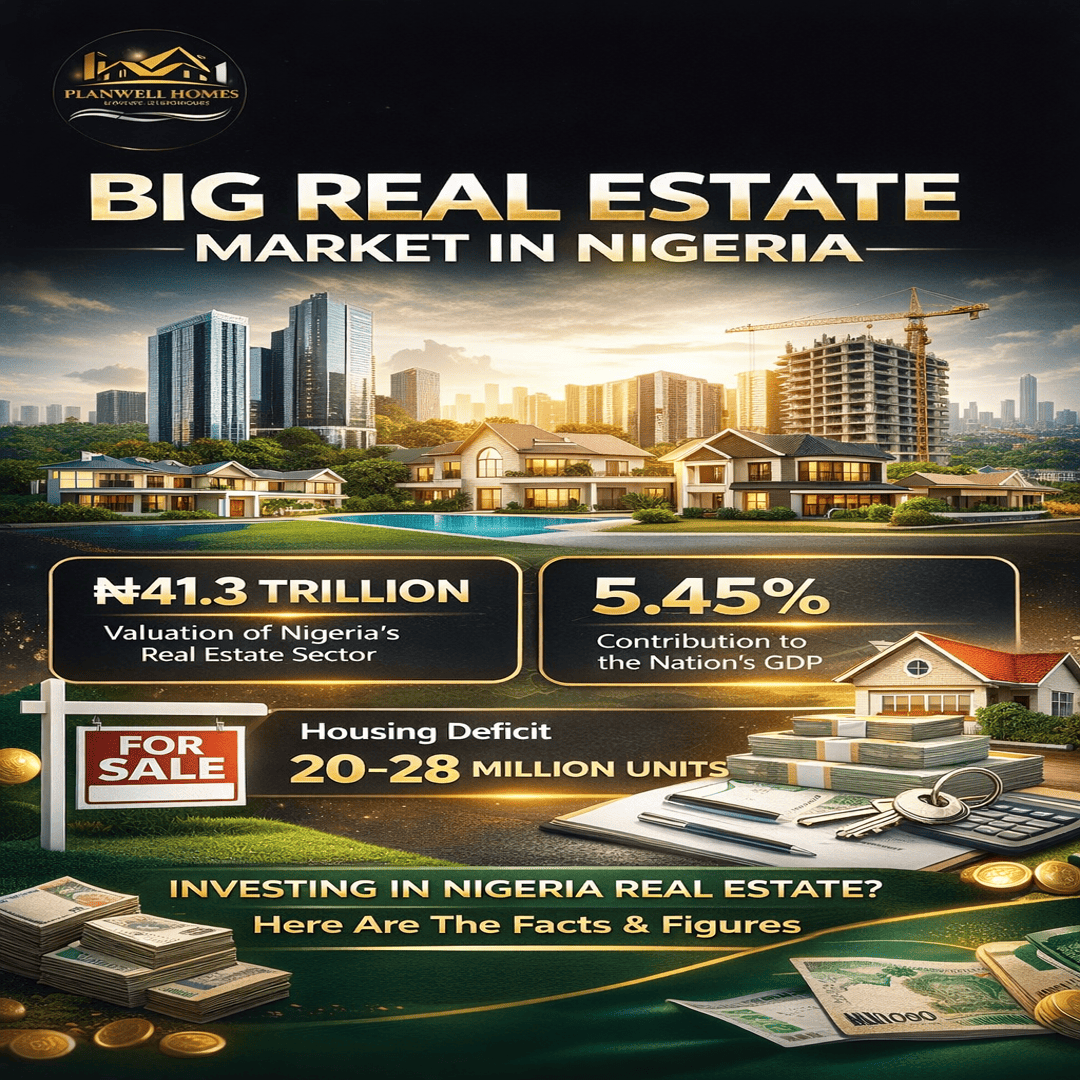
The real estate sector in Nigeria has been valued at about ₦41.3 trillion in 2024 following a rebasing of the country’s GDP by the National Bureau of Statistics (NBS). This makes real estate one of the largest contributors to the Nigerian economy — ranking just behind trade and crop production in overall economic value. (Businessday NG)
Globally, Nigeria’s real estate sector is projected to continue expanding. Some forecasts estimate that the overall market (including residential and commercial property combined) could reach a value of around $2.61 trillion by 2025 — with residential property making up the lion’s share of that total. (propertyaccess.ng)
📈 2. Contribution to the Nigerian Economy
Real estate’s contribution to Nigeria’s GDP is significant:
- In 2024, the sector accounted for about 5.45% of GDP, highlighting its role as a core part of economic activity, from property sales to rentals and construction services. (Housing TV Africa)
- The sector recorded over 46% nominal growth in one quarter alone, reflecting strong demand and increasing economic activity. (Housing TV Africa)
This growth underscores the importance of property markets not just in wealth creation but also in job creation — from real estate agents and developers to architects, builders, and service professionals.
🏠 3. Residential vs Commercial Real Estat
Residential real estate dominates the market:
- About 86% of the total real estate market is residential, meaning most property activity in Nigeria involves homes, apartments, and residential land. (Real Estate in Nigeria)
- Demand is high in cities like Lagos, Abuja, and Port Harcourt — especially for rentals, mid-range homes, and luxury apartments.
Commercial real estate — offices, retail, warehouses — is also growing, but at a slower rate. By 2025, it is expected to be worth hundreds of billions in U.S. dollar terms and attract investors interested in business properties. (Statista)
📉 4. Housing Deficit & Demand Drivers
Despite strong numbers, Nigeria continues to face a huge housing shortage:
- Experts estimate a housing deficit of 20–28 million units across the country, meaning demand significantly outstrips supply. (Laterra)
- Urbanisation — driven by population growth and internal migration — is pushing more people into cities, where housing is scarce and prices are rising.
This sustained demand is a major reason real estate remains highly attractive to investors and developers alike.
🔮 5. What This Means for Investors
Here’s why real estate in Nigeria matters right now:
- High investment potential: With trillions of naira tied up in property and big future growth forecasts, investors see real estate as a long-term wealth builder. (Businessday NG)
- Growing rental markets: Urbanization and a large, young population mean strong rental demand in major cities. (Laterra)
- Diversification away from oil: As the economy broadens, property is becoming an alternative to oil-dependent sectors like energy.
However, challenges like infrastructure costs, mortgage access, and regulatory hurdles remain, meaning smart investors focus on due diligence and market research before committing capital.
🧠 Final Takeaway
Nigeria’s real estate sector isn’t just big — it’s a cornerstone of the nation’s economy and a key destination for investors and property entrepreneurs. From contributions to GDP to huge unmet housing demand, the market continues to show resilience and long-term growth potential.
Whether you’re a first-time buyer, landlord, or investor, understanding these numbers helps you make smarter decisions in a market that’s shaping Nigeria’s future.